Wednesday, 9 October 2013

9 Oct 13 - Pelagic and Sora sojourn

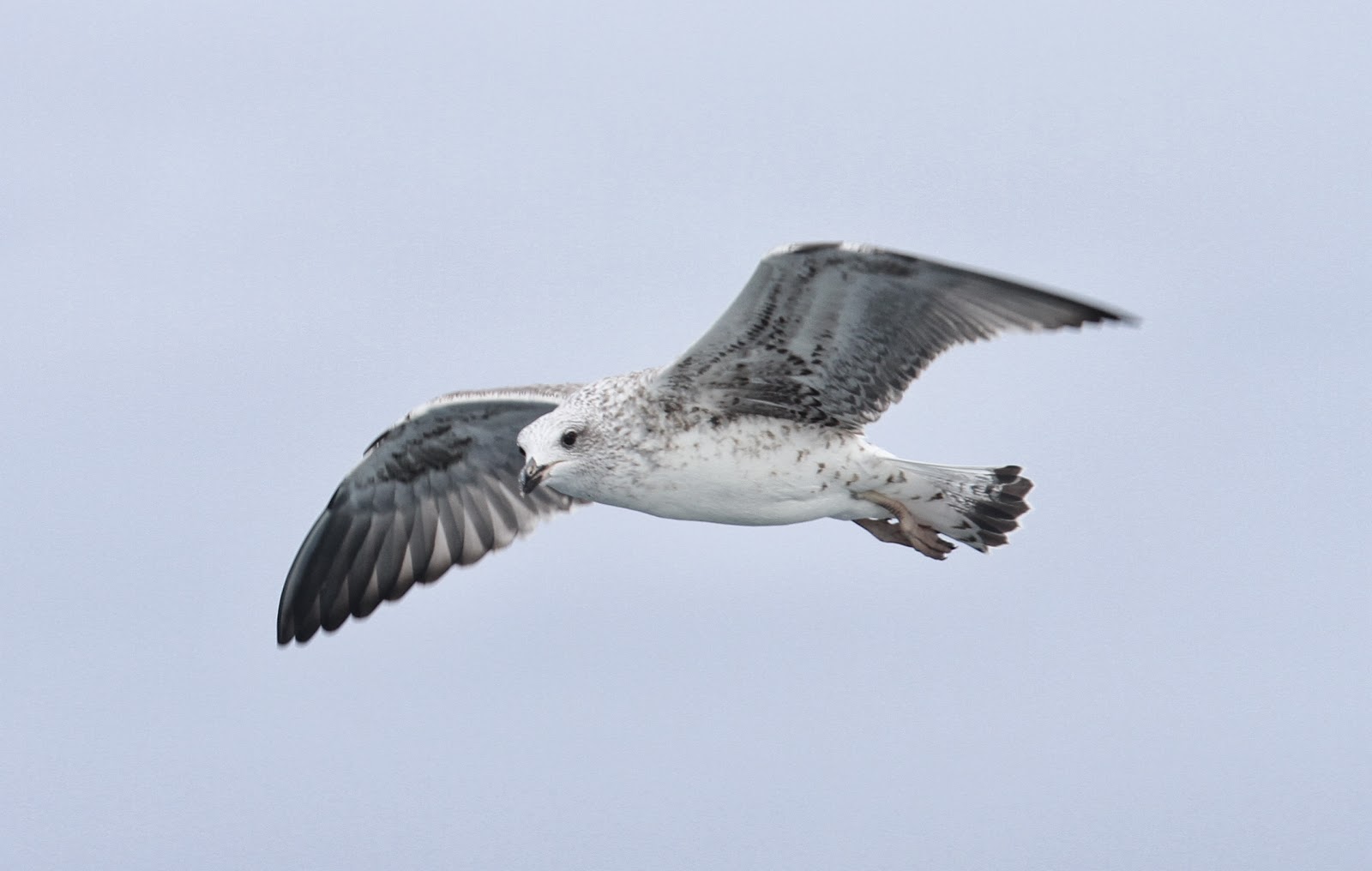
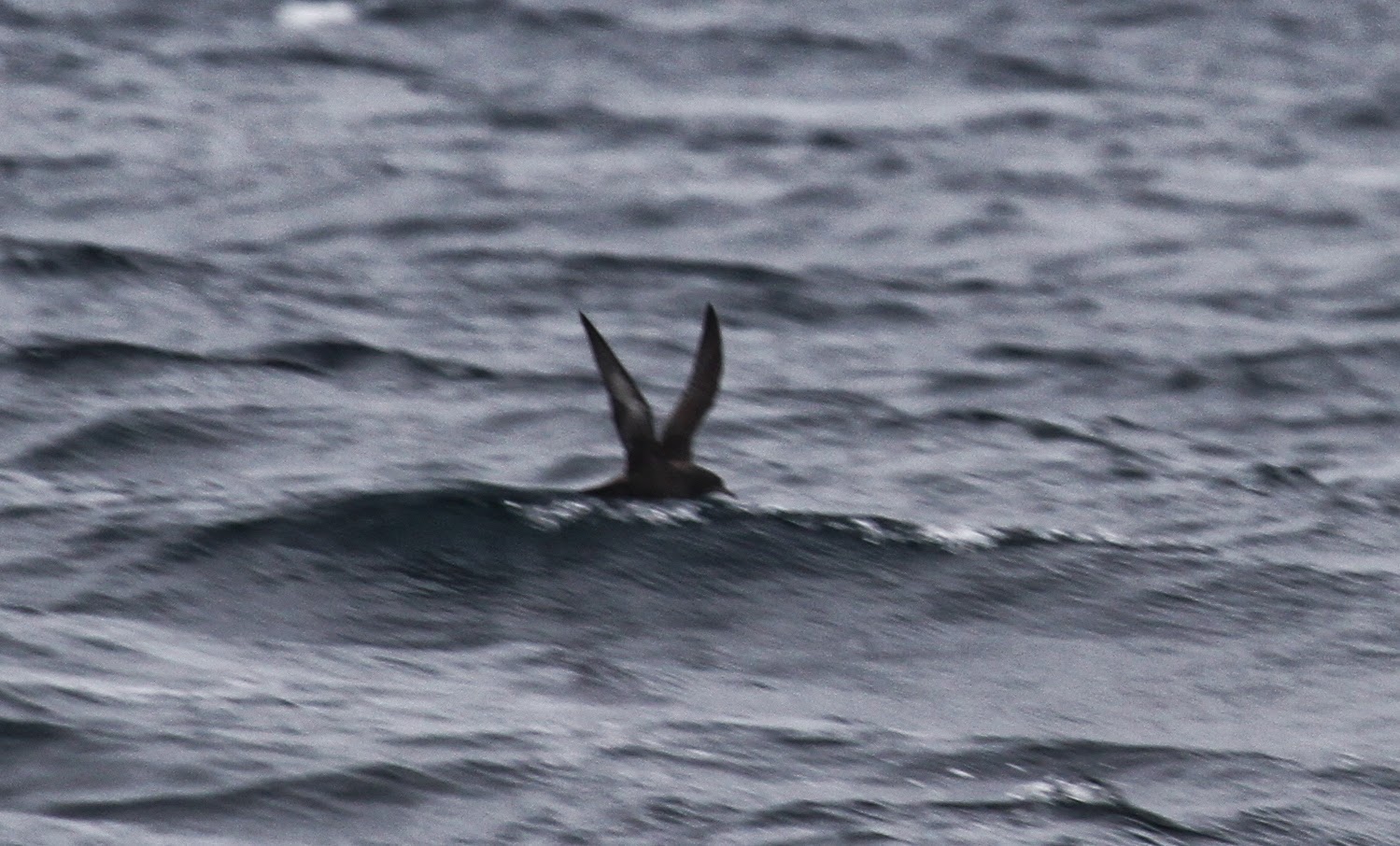
I went on the pelagic out of St. Mary's today. There wasn't large numbers of anything, but there was quite a bit of variety. The best bird was a Grey Phalarope that flew around the boat and landed on the water for a while. A Red-necked Grebe on the way out of The Scillies and a summer-plumaged Great Northern Diver were also pretty good to see. Seabirds were hard to come by, but 4 Balearic, 1 Sooty and 6 Manx Shearwaters, 12 Bonxies and 4 small skuas were all seen from the boat. There was a constant following of gulls behind the boat, attracted by the chopped-up Pollock. Yellow-legged, Lesser-black-backed, Herring, Great-black-backed, Black-headed, Mediterranean Gull and Kittywake were all seen.

On the way back the boat skipper, Jo Pender dropped us off on Tresco so that we could go and see the Sora which had been found whilst we were on the pelagic. The Sora showed pretty well, although I wasn't very popular when I dropped radio on the floor whilst trying make some room for others to see the bird. It landed on the floor with a loud 'crack' and the Sora hot-tailed it back into the thick cover of the reads. Thankfully, it was only the photographers who were at the front of the hide, so I didn't feel too embarrassed. It makes a change for a birder to scare a bird that photographers are watching, rather than the other way round.

Common Dolphin, Scilly Isles

Common Dolphin with Lesser-black-backed Gull, Scilly Isles


Common Dolphin, Scilly Isles

Red-necked Grebe, Scilly Isles

Red-necked Grebe, Scilly Isles

Yellow-legged Gull, Scilly Isles

Yellow-legged Gull, Scilly Isles

Great Skua, Scilly Isles

Great Skua, Scilly Isles

Great Skua, Scilly Isles

Great Skua, Scilly Isles

Great Skua, Scilly Isles
Sooty Shearwater, Scilly Isles
Balearic Shearwater, Scilly Isles
Gannet, Scilly Isles

Kittiwake, Scilly Isles


Monday, 7 October 2013

7 Oct 2013 - Bryher

Had a great day on Bryher today. After some photos of a strange looking stint emerged last night, about 10 birders took the early boat across to the island to check it out and then spent most of the day there. The stint was probably just a Little Stint, but there was plenty of other birds on the island too. The best bird, which I found, was a Little Bunting that I flushed up from a grassy field. It called a few times and then landed in some bracken and then on some rocks. It showed for about a minute and then flew off with some Meadow Pipits, despite being searched for it wasn't seen again until I re-found it some 7 hours later with a big flock of Meadow Pipits around the campsite.
The radio was handy again as it alerted me to a juvenile Rose-coloured Starling that was flying around the Hell Bay Hotel behind me. It flew around for a minute and the landed in Martin Hallams back garden.
I also managed to get great views of a Yellow-browed Warbler by playing my Long-tailed Tit recording and seeing what came out to it. A few other nice birds on the island included about 5 Whinchat.

Sunday, 6 October 2013

Isles of Scilly 5th and 6th Oct 2013

It's been a quiet couple of days. On Saturday (5th) I headed over to St. Martins with Lincs birder Dean Nicholson. Although a pleasant walk around the island, passerines were quite thin on the ground with a couple of Yellow-browds and Lesser Whitethroat being the only birds of note. Waders were in good numbers though along the southern beach with 200+ Sanderling, 60+Ringed Plover, 2 Dunlin, 2 Bar-wits and a Grey Plover. On retuning to St Mary's I caught the bus up to Watermill where there was an Arctice Warbler at Newford Duckpond.

Arctic Warbler, Newford Duckpond

Arctic Warbler, Newford Duckpond

Arctic Warbler, Newford Duckpond
Today (6th) I went up through the airport and then down to Porthelick, through Carn Friars, Normandy and then around Green Farm and Content Farm. I was pretty gutted that after spending almost two hours on the airfield at the windsock that I failed to find a Short-toed Lark that spend the day lurking on the opposite side of the runway. The rest of the day was pretty quiet with only a few common migrants as reward to some hard work in the field.

Friday, 4 October 2013

Isles of Scilly - 4 Oct 13


I started off first thing at Pendeen Lighthouse, just before 7.30am. As I drove down to the lower car park, a bird flew out from the side of the track and landed in front of my car, dazzled slightly by my headlights. It was facing away from me, but then turned it’s head 180 degrees to look at me – a Wryneck! It sat in front of the car for a while and then flew up onto the wall next to me, but alas not long enough for me to get any photos. It showed well later on my way out of Pendeen and I managed to get a few shots of it. Alas, as I was trying to get back to St. Just airfield I didn’t have time to look at the rest of Pendeen. If I had, maybe I’d have found the Isabelline Shrike that was found later in the day! Could’ve, should’ve, would’ve – didn’t.
Wryneck, Pendeen, Cornwall

Wryneck, Pendeen, Cornwall

Anyway, I got my flight across to The Scillies at 9.30, moved into my digs, got the groceries in and headed out into the field. It must have been my Wryneck day today as at the north end of Port Mellon I noticed a small bird hoping around the rocks, raised my bins and realised that I’d found my second Wryneck of the day! There were lots of White Wagtails and Wheatears on the beaches. I’d estimate that I saw at least 50 White Wagtails today and around 30-40 Wheatears. My route took me over Harry’s Wall, Porthloo, Telegraph, Content Farm, Pelistry, Green Lane and Watermill. Spotted Flycatchers were quite numerous (6) with a few Pied Flys, 3 Whinchats, 5 Yellow Wagtails and a nice winter-plumaged Blue-headed Wagtail.
Once I’d left Hugh Town, I didn’t see a single birder (just a few dudes). I’m sure there must be more stuff about. Just hoping that I can find it!

Thursday, 29 August 2013

East Norfolk 28 - 29 August

I've spent the past two mornings out at Horsey. The access road along to Horsey Gap car park has been quite good with plenty of Phylloscs, up to 3 Read Warblers and a couple of Pied Flycathers. The find of the day yesterday, was a Wryneck in Horsey Gap car park. It was flushed from the car park and flew into the bushes on the west side, but despite waiting around for a while it didn't show its face again. Tree Pipit and  Yellow Wagtail were also nice.
A juvenile Rose-coloured Startling turned up at the south side of Horsey yesterday, although it's apparently been around further south for a few days. I decided to go and have a look at it today, so after having another (unsuccessful) look for the Wryneck and checking the north side of Horsey Gap, I headed south. There were lots of Northern Wheatears around the Nelson Head track (up to 15), 7 Yellow Wagtails flew north, Lesser Whitethroat numbers seemed higher (4 in total), 4 Redstarts and 3 Whinchats added to the diversity.

One of the many Northern Wheatears at Horsey.

I found the starling feeding in the brambles about 500 metres south of the Nelson Head track. It was quite showy, but every time it flew it got totally hammered by all the migrant Swallows in the neighbourhood.
Juvenile Rose-coloured Starling, Horsey, Norfolk

Juvenile Rose-coloured Starling, Horsey, Norfolk

Juvenile Rose-coloured Starling, Horsey, Norfolk

Juvenile Rose-coloured Starling, Horsey, Norfolk
 

Juvenile Rose-coloured Starling, Horsey, Norfolk

Juvenile Rose-coloured Starling, Horsey, Norfolk

Juvenile Rose-coloured Starling, Horsey, Norfolk

Juvenile Rose-coloured Starling, Horsey, Norfolk

Juvenile Rose-coloured Starling, Horsey, Norfolk

Juvenile Rose-coloured Starling, Horsey, Norfolk

Juvenile Rose-coloured Starling, Horsey, Norfolk

Juvenile Rose-coloured Starling, Horsey, Norfolk


Tuesday, 27 August 2013

East Norfolk fall

I'd missed all the excitement of the previous 3 days, having been back in Stoke-on-Trent for the Bank Holiday, so Tuesday morning found me heading out to east Norfolk to see if I could find any 'left-overs' from the big fall which occurred over the weekend. I headed down the Nelson Head track and over to my little patch of bushes on the farmland south of the track, which I have permission to bird. This isolated patch of bushes, which has provided me with Great Snipe, Barred Warbler, RBF, Wryneck and R-b Shrike in the past didn't disappoint. The first thing I found was a Greenish Warbler. It perched above my head for a few seconds, just long enough to see a few field marks and then it took me an hour and a half to see it again. In the end it started singing and giving really good views, albeit still inside the bushes, making it impossible to photograph, but I did manage to record the bird calling and singing on video (sound only).
Crank up your volume and have a listen...


Also in the bushes, was a slightly more co-operative Icterine Warbler.

Icterine Warbler, Horsey, Norfolk

Icterine Warbler, Horsey, Norfolk

Icterine Warbler, Horsey, Norfolk

There were still plenty of common migrants around. Between the south side of Horsey and  Waxham I must have seen about 40-50 Wheatears, 8 Common Redstarts, 5 Whinchats, 20 Willow Warblers, 5 Pied Flycatchers and 2 Spotted Flycatchers.

A really nice day!

Pied Flycatcher, Waxham.

Spotted Flycatcher, Horsey

Northern Wheatears, Horsey.


Monday, 12 August 2013

Gulls and waders at Cley

It was the Norfolk Records Committee meeting today, so I headed up to Cley for some birding in the morning before the meeting. I met up with Mark Golley and we headed for North Hide at Cley. One of the first things we saw was an amazing-looking leucistic Barn Swallow. It was almost totally white apart from some buff areas around its face and back. The other swallows and Skylarks gave it a bit of a hard time so it didn't hang around for long.
North Hide was quite good, with the best bird being a juvenile Red-necked Phalarope feeding not too far from the hide.

Red-necked Phalarope, juvenile

Red-necked Phalarope, juvenile

Red-necked Phalarope, juvenile

Red-necked Phalarope, juvenile

Red-necked Phalarope, juvenile


It was then down to Kelling Quags to look for Wood Sandpiper, of which we saw two. There were also a rather nice juvenile limosa Black-tailed Godwit which flew off before I managed to get some shots of it, plus some Ruff and Greenshanks.

Kelling Quags


Wood Sandpiper

Wood Sandpiper

Ruff - male at back, female at front

After the committee meeting, a few of us went to the Cley roost where there was a nice male Caspian Gull on Pat's Pool, plus a couple of Yellow-legged Gulls, about 50 Dunlin and one moulding adult Curlew Sandpiper.

Adult male Caspian Gull

Adult male Caspian Gull


Marsh Harrier